

Centrifugal casting
Centrifugal casting process guarantee the highest quality of casting
TECHNOLOGY
Hohenlimburger is specialised in supplying centrifugal casting (bushes, rings and sleeves) using all copper alloys covered by international and local casting standards (DIN EN 1982:1998-12, PN-EN 1982, DIN 1705, 1709, 1714, PN 91/H-87026, ASTM B271, BS 1400), as well as using special alloys.
APPLICATION OF CENTRIFUGAL CASTING THAT WE OFFER
Bearings, sliding bearings, half bearings, bushes, worm gears, sealing rings, gears, shaft, screw nuts, rings, sleeves and plain bearing, wind turbine used in Power Generation, Oil&gas, Marine, Fluid Control, Engineering, Aerospace, Mining
PARAMETERS
Our specialty are large size centrifugal bushes, centrifugal rings and centrifugal sleeves:
Diameters range: 80 -3000 [mm]
Minimum wall thickness: 10 [mm]
Maximum length: 1000 [mm]
Material type: Aluminium Bronze, Tin bronze, Leaded bronze; Brass alloy, Special alloy
Our suppliers use induction furnaces, modern casting equipment and machining tools in their production process. The machinery and technologies ensure excellent mechanical properties of the castings. The products we offer undergo quality control to confirm that the items we sell are free from defects. Our suppliers test the mechanical properties of their products and analyze their chemical composition using emission spectrometry. They also conduct penetration, ultrasonic tests, radiographic examinations, metallographic microscopic examination and issues certificates of conformity with EN 10204-2.2, 2.3, 3.1B.
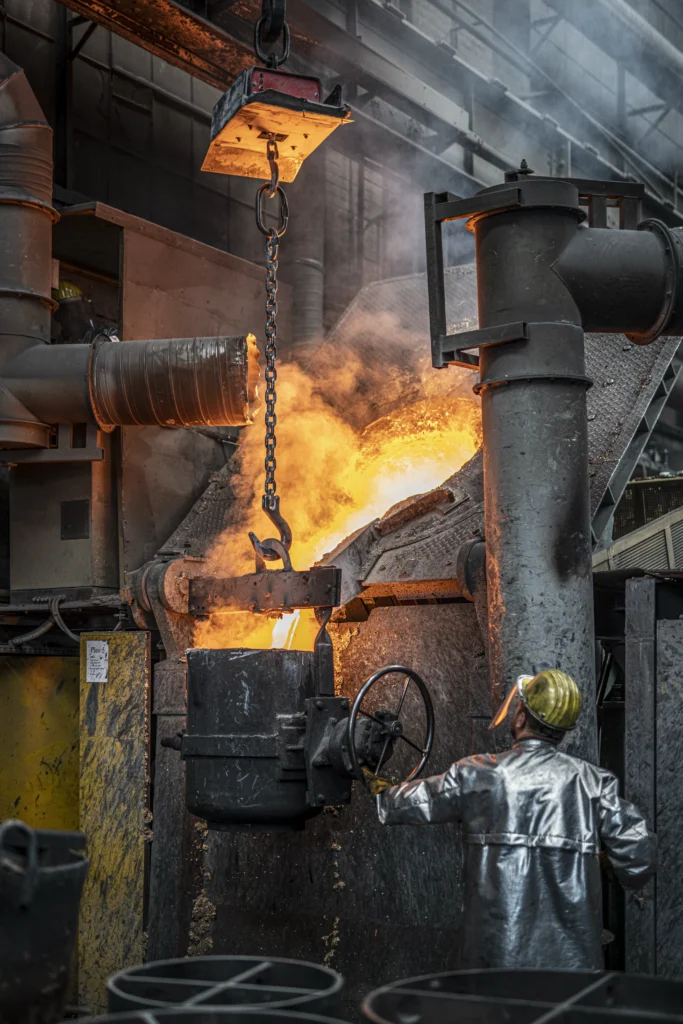
During centrifugal casting process, metal is poured into a rapidly rotating metal mold. The metal is pressed against the walls of the mold with centrifugal force. The pressure created ensures close contact between the metal and the mold. Gases and intrusion are transferred towards the center of rotation, to the inner part of the casting, which is removed by subsequent treatment. The casting gradually solidifies away from the wall in the direction of the axis of rotation. The remaining molten metal is pushed into the foundry cavities, which improves the homogeneity of the casting.