

Gravity casting
Gravity Casting process guarantee high quality of the casting
TECHNOLOGY
Our suppliers use gravity casting to produce plates and bars using all copper alloys covered by global standards: PN-EN 1982, DIN 1705, 1709, 1714, PN 91/H-87026, ASTM B271, BS 1400 and using special alloys too.
APPLICATION OF GRAVITY CASTING THAT WE OFFER
Bearings, sliding bearings, half bearings, bushes, worm gears, sealing rings, gears, shaft, screw nuts, rings, sleeves and plain bearing, wind turbine used in Power Generation, Oil&gas, Marine, Fluid Control, Engineering, Aerospace, Mining
PARAMETERS
Diameters range: 10 – 1100 mm
Maximum length: 500 mm
Maximum weight: 4 tons
Alloy:
Standards: PN-EN 1982, DIN 1705, 1709, 1714, PN 91/H-87026, ASTM B271, BS 1400
Material type: Aluminium Bronze, Tin bronze, Leaded bronze; Brass alloy, Special alloy
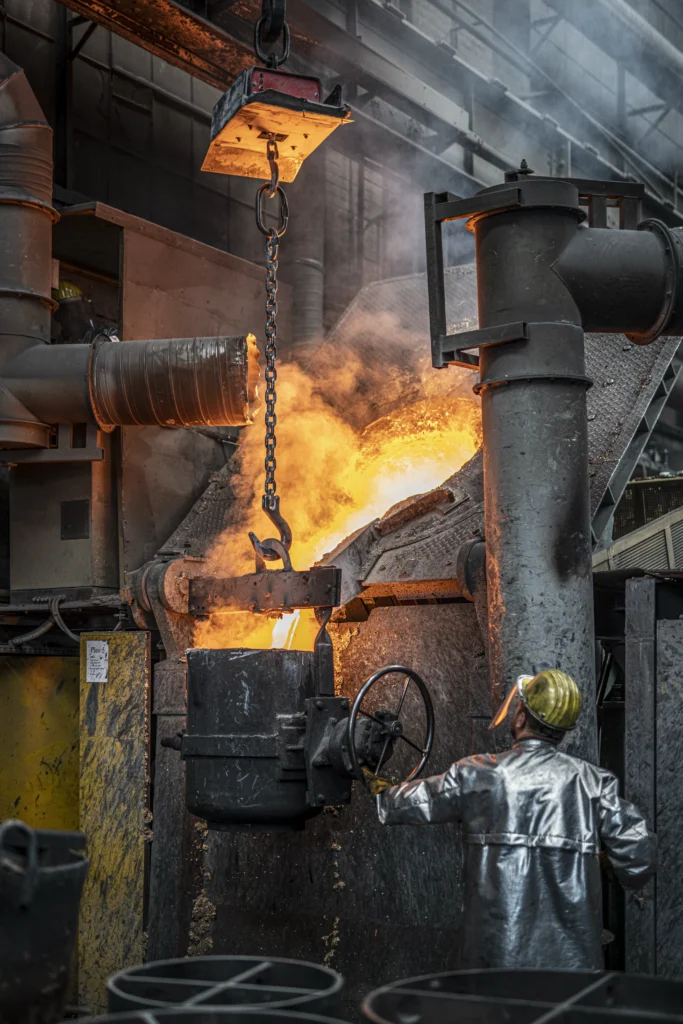
Gravity casting is a mould casting process, where the liquid metal is poured from a vessel into the mould. The mould fills with gravity force, filling can be controlled by tilting the die. This process guarantee a better surface finish than sand casting and better mechanical properties, both due to rapid solidification. This process has a higher casting rate than sand casting Advantages of this process include the possibility of low gas porosity, and fine grain sizes can be achieved.
Gravity casting is much less complex than Centrifugal Casting. In gravity casting process there is no need to use centrifuges. Advantages of this process is shorter procution lead time than with centrfugal casting process. This process has a lower casting rate than centrifugal casting proces. Disadvantages of gravity casting proces are higher gas proosity ratio than in centrifugal casting.